
blank
ICAC 2025 Keynote Speakers
Coming Soon!
ICAC 2023 Keynote Speakers
KEYNOTE SPEAKER 1 |
|
|
Dr Fairoza is currently working as a Senior AI Engineer in Corpy & Co. Inc. She previously worked as Senior AI Engineer in Torum, Senior Staff Engineer (Data Scientist) in STMicroelectronics, a co-founder in Ever AI Technologies, a Machine Learning Engineer in Vettons and an Assistant Professor in the Kyoto College of Graduate Studies for Informatics, Japan. She completed her Ph.D of Information Science & Control Engineering from Nagaoka University of Technology, Japan. She was also the recipient of Women in ICT ASEAN awards in 2021 under the Rising Star category. She is also active in community works such as CoronaTracker (Research Lead) and Women in AI (Ambassador of Malaysia). She has recently been awarded the Ambassador of the Year (Runner-up winner) for her active works in Women in AI. |

KEYNOTE TITLE:Deploying AI Projects in Industry : Myths and RealityAI projects are developed according to the software engineering project management, but with few exceptions according to the industry needs. AI can help speed up operations and can yield more revenue, but requires long term investments. AI requires multiple iterations of training and development to ensure the reliability of any AI features developed. Besides that, AI projects in different industries require different sets of data and algorithms. Often, the tradeoff between processing time, operational cost and algorithms accuracy are considered to deploy an AI project. The rate of AI project deployment usually depends on the importance of the project, manpower and computing power that the company has. |
KEYNOTE SPEAKER 2 |
|
|
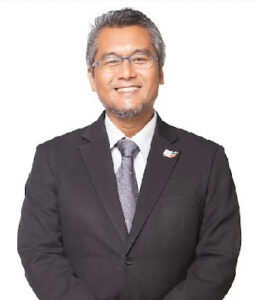
Iskandar Iskak is the Director Sales Education, TM ONE. He received his Bachelor of Engineering in Electronics Semiconductor from Tokai University, Japan and his Master of Science (MSc), in Engineering Business Management with Merit Award from University of Warwick. He also served as the General Manager of Vertical Marketing and Sales Enablement TM ONE from June 2016 until December 2018 and General Manager of Vertical Business Development, Customer Advocacy TM ONE from January 2019 until December 2019. He specializes in developing sales and marketing capabilities for the last three years with multiple ground breaking achievements. |
KEYNOTE TITLE: Case Study of How A National Telco Learns To Automate via RPA
With RPA (Robotic Process Automation), software robots are developed to imitate the processes a human works with a computer to do simple, high-volume, and repetitive tasks. For example, an RPA bot can click around a user interface, browse the web, grab data, and enter keyboard inputs. In other words, RPA can do the kind of tedious work that bores people, freeing them up to do other things. It also works faster than people and eliminates human error. Yet for a huge national telco like Telekom Malaysia, those processes runs in the number of hundreds of thousands, if not millions. And to make things worse, it runs deep within working echelons of the company, making it virtually impossible for a centralized group of professional developers to uncover and react fast enough to changing customer requirement and dynamic competitive pressures. Therefore we have adopted a low code approach to enable citizen developer communities to flourish within the company and democratize automation. |
KEYNOTE SPEAKER 3 |
|
|
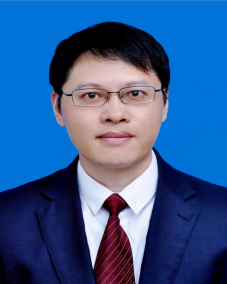
Xi Yang was born in Yueyang in 1978. He received the B. S. degree in electronic information engineering from the Jishou University, Jishou, China, in 2001, and the M. Eng. degree in communication and information system from the North China Electric Power University, Baoding, China, in 2004, and the Ph. D. degree in Information and Communication Engineering from the National Mobile Communications Research Laboratory (NCRL), Southeast University, Nanjing, China, in 2014. He has been with the School of Communication and Electronic Engineering (SCEE), Jishou University, Jishou, China, since 2009, where he is currently the dean of the SCEE. From 2014 to 2020, he was a post-doctoral with the State Key Laboratory of Millimeter Waves, Southeast University, Nanjing, China. He was the leader of 3 scientific projects financed by the National Science Foundation of China (NSFC). He published more than 50 papers in journals and conference proceedings and authorized 10 patents in the area of wireless communications and signal processing. His current research interests include cognitive radio, smart communication, statistical and intelligent signal processing for wireless communications and smart grids. Prof. Yang is a member of IEEE and IEICE. He serves as a technical reviewer for various international journals. He received Third Prizes of teaching achievement of Hunan Province of China in 2019 and 2022, respectively. Currently, he serves as a member of the Discipline Evaluation Group and the Excellent Talent Project of Hunan Province in China. |
KEYNOTE TITLE:Effective Spectrum Sensing Algorithm in Non-asymptotic Conditions for Cognitive RadiosThis presentation mainly focuses on the primary signal detection algorithms under non-asymptotic conditions for cognitive radios networks, including primary signal detection under small sample conditions in the uniform noise scenario, and efficient detection of primary user signal in the non-uniform noise environment. The main results are as follows: ① Aiming at the problem of detecting the primary user signal in the uniform white noise scenario under the non-asymptotical condition, an improved blind detection algorithm based on the spherical hypothesis test is proposed. Theoretically, an accurate expression of the false alarm probability based on Meijer’s G function is derived. At the same time, a high-precision approximate calculation method for the false alarm probability and a low complexity calculation method for the theoretical decision threshold are proposed, and the theoretical analysis result of the detection probability is also given; and ② Aiming at the problem of detecting the primary user signal in the non-uniform noise scenario under the non-asymptotic condition, a detection algorithm based on the independence hypothesis test is proposed. The algorithm has the advantages of reliable decision results under the condition of relatively small sample size or large signal dimension. At the same time, the proposed method for the calculation of decision threshold is simple to implement, so it has better real-time performance. |
KEYNOTE SPEAKER 4 |
|
|
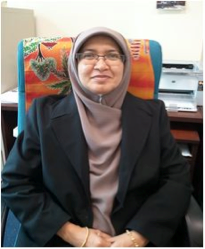
Siti Zaiton Mohd Hashim is an Associate Professor and currently holds a post as the Deputy Dean of Research and Innovation in the Faculty of Computing at Universiti Teknologi Malaysia (UTM) in Johor. She received her B.Sc. degree in Computer Science from the University of Hartford in the USA, an M.Sc. in Computing from the University of Bradford in the UK, and a Ph.D. in Soft Computing from The University of Sheffield in the UK. Her research interests include Soft Computing and its applications, Machine Learning, and Intelligent Systems. She has supervised or co-supervised over 20 master’s students and 40 Ph.D. students. She has authored or co-authored more than 120 publications, with an H-index of 24 and over 3,000 citations. She is now an associate member of the UTM Big Data Centre of Excellence (UTM-BDC) at UTM. |
KEYNOTE TITLE:AI & Big Data: Reimagining its Social ImpactWe live in an era where artificial intelligence (AI) and big data are driving innovation and transforming our lives. The potential social impact of AI and big data is immense and limitless. They have the power to solve complex problems, improve decision-making, and enhance our lives. The exponential growth of AI and big data has raised concerns about privacy, security, and ethics. As we move forward, it’s crucial that we reimagine the social impact of these technologies to ensure that they benefit society as a whole. How do we ensure that AI is developed and used in an ethical and transparent manner, taking into consideration the rights and interests of all stakeholders, especially marginalized and vulnerable communities? How do we address the issues of data collection and analysis being done in a way that respects privacy and security, while also creating value for society? The adoption of these technologies must be inclusive and equitable, promoting diversity and inclusion. Let us reimagine their social impact, creating opportunities for everyone and contributing to a sustainable future. |
KEYNOTE SPEAKER 5 |
|
|
Ruslinda binti A. Rahim received her Doctor of Philosophy (Ph.D) from Waseda University, Japan, majoring in Nanoscience and Nanoengineering. She studied for her M. Eng and B. Eng degrees in Electrical and Electronic Engineering at the Muroran Institute of Technology, Japan. Currently, she is the Director of National Nanotechnology Centre (NNC), at the Ministry of Science, Technology and Innovation (MOSTI). Her roles at the NNC MOSTI include coordinating research development and technology activities at national level as well as safety standards and regulations related to nanotechnology and advanced materials in Malaysia. She is a Board Member of Malaysia Board of Technologist (MBOT) and an Alternate Member, Board of Directors, NanoMalaysia Berhad. She is also responsible as Malaysia’s focal point for ASEAN COSTI sub-Committee on Material Science and Technology, OECD Working Party on Manufactured Nanomaterials (WPMN), Executive Committee Member of the Asia Nano Forum (ANF), member of ISO under OECD/TC 229 Nanotechnologies, member of NSC 02/TC 15 Nanotechnologies under Standards Malaysia and secretariat for the National Nanotechnology Coordination Committee. Dr. Ruslinda is also active in research and is a Research Fellow in Institute of Nano Electronic Engineering (INEE), Universiti Malaysia Perlis (UniMAP), Associate Research Fellow in Institute of Microengineering and Nanoelectronics (IMEN), the National University of Malaysia (UKM) and Visiting Professor at Czech Technical University in Prague, the Czech Republic. |
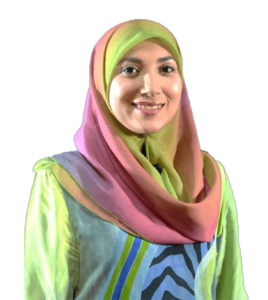
KEYNOTE TITLE:NanocomputingAs technology improves and its intertwining application widens in our daily lives, the need to produce devices as small as possible becomes more pressing. It is also imperative to ensure these devices are energy efficient without compromising their performance. Computers, now an indispensable part of our modern lives are no exception, ranging from supercomputers to smartwatches, the evolution of computing power, size and applications are fascinating throughout the decades. The future is far more exciting. This keynote will look into the potential of nanocomputing and its applications in numerous technology domains, as well as challenges and promises. The variations of computing at nano scale, from natural to quantum computing in the Big Data age will be discussed. |
KEYNOTE SPEAKER 6 |
|
|
Norlisa, also known as Lisa, is a 20-year veteran of multiple industries, including semiconductor, IT, Blockchain, and business development. Bachelor of Electrical Electronic System Engineering from Nagaoka University of Technology, Professional in Semiconductor Fabrication from the University of California Berkeley, Tradeshow Professional from San Jose State University, Copywriter Professional from Singapore Institute of Management, Physics Researcher at USM, and Master of Mechanical Engineering from UTM are her credentials. She is currently a PhD candidate at IIUM-ISTAC. In the past four years, she has become such a proponent of Blockchain technology that she is now the CEO of a Blockchain-based software company, Intelliware Solutions SDN BHD, with offices in Medini 6, Cyberjaya, and Penang. She has demonstrated the utility of Blockchain across all technological domains, including agritech, edtech, Fintech, and others. |
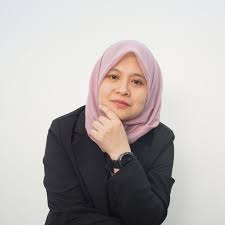
KEYNOTE TITLE:Blockchain technologyEmployees pose a significant risk of both intentional and unintentional insider assaults due to their extensive familiarity with a company’s systems and security measures. Companies risk losing money and having their reputations harmed as a result of these security lapses. Our keynote address, titled “Securing Reality: How Blockchain Battles Data Tampering in the Real World,” delves into how blockchain technology strengthens data integrity and counters insider threats. Learn how blockchain may be used to develop secure and robust smart technology solutions in a variety of fields. In our electronically interconnected world, insider assaults pose a serious threat to enterprises. Join us to see how blockchain can protect your company from this threat and keep your data safe.
|
ICAC 2021 Keynote Speaker
KEYNOTE SPEAKER 1 |
|
|
Dr Nor Azman Ismail is Associate Professor of Human-Computer Interaction (HCI) and Associate Chair (Research and Academic Staff) at School of Computing, Faculty of Engineering, Universiti Teknologi Malaysia (UTM), Johor Bahru. For the past 25 years, Nor Azman has been an active member of the computing research community. He obtained his Bachelor of Science in Computer Science & Education (Mathematics) from Universiti Teknologi Malaysia (UTM) (1995) and subsequently receiving Master of Information Technology from Universiti Kebangsaan Malaysia (UKM) (2000). In 2007, he was awarded a PhD in the field of Human-Computer Interaction from Loughborough University, United Kingdom. He has produced various scientific research publications, as well as supervising over 100 students undergraduate and postgraduate. He has held several senior leadership positions including University Web Director and Deputy Director of Corporate Affairs (2009 – 2018); Head of UTM VicubeLab Research Group working in the design, implementation and application of visual computing and virtual environment (2018); Research Fellow (2009 – 2018) of Media and Game Innovation Centre of Excellence (MaGIC-X), UTM-IRDA Digital Media Centre. He has received various international awards and honours including Al-Khawarizmi Innovation Award by Universiti Sains Islam Malaysia (USIM) in 2016 and Webometrics award by Faculty of Computing, Universiti Teknologi Malaysia (UTM) for two consecutive years (2015-2016). Most of his research projects and industry collaboration are focused on the domain of Multimodal Interaction, UI/UX experiment, Image Retrieval, Social Media Analytics and Web Mining. |
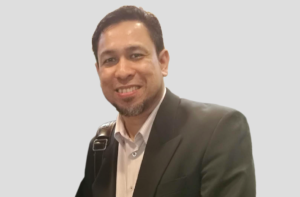
KEYNOTE TITLE:
|
KEYNOTE SPEAKER 2 |
|
|
Zuraida Abal Abas is currently an Associate Professor at the Intelligent Computing & Analytics Department, Faculty of Information and Communication Technology, Universiti Teknikal Malaysia Melaka (UTeM). She graduated with a first class degree in BSc in Industrial Mathematics from Universiti Teknologi Malaysia (UTM), obtained MSc in Operational Research from London School of Economics (LSE) and received PhD in Mathematics from Universiti Teknologi Malaysia (UTM). Inspired by her interest in mathematics, operational research and analytics, she is interested in expanding her research areas in multidisciplinary fields and establishing collaborative research with other institutions and industry partners. |
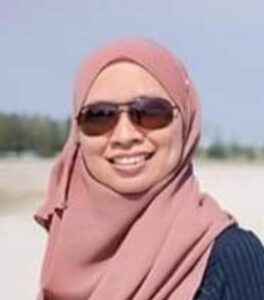
KEYNOTE TITLE:
|
KEYNOTE SPEAKER 3 |
|
|
Yusliza Yusoff is a Senior Lecturer in School of Computing, Universiti Teknologi Malaysia, where she has devoted for the last 10 years. She has extensive experience in Computer Science area. Specialization in optimization, prediction, neural network and multi objective algorithms. She received BSc. of Computer Science and System Engineering from Muroran Institute of Technology, Japan, in 2007. Two years and eight months working experience in Panasonic AVC Network Pasir Gudang, Johor Bahru, Malaysia as an Engineer II in Software Section of Research and Development Department. Appointed as a Tutor in Universiti Teknologi Malaysia (UTM) in 2010. She obtained her Master degree (Computer Science) and Doctor of Philosophy (Computer Science) as the best student receiver award from UTM in 2013 and 2017 respectively. She received Erasmus Mundus Scholarship award in 2014 for a ten months attachment program in Hochschule Darmstadt University of Applied Science, Germany. |
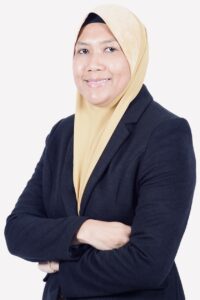
KEYNOTE TITLE:
|
ICAC 2020 Keynote Speaker
KEYNOTE SPEAKER 1 |
|
|
Zhou Kai-Qing received the Ph.D. degree in computer science from the Universiti Teknologi Malaysia, Malaysia, in 2015 and was a Post-doctoral fellow at Central South University, China from 2016 to 2018. He is a head of data science and big data technology department, college of information and engineering, Jishou University, China. He is doctoral co-supervisor of computer science in UTM and master supervisor of electronic information in Jishou university. His research interests include fuzzy Petri net and soft computing techniques. He is a leader of some grants, such as the National Natural Science Foundation of China (NSFC) (No. 61741205), Research Foundation of the Education Bureau of Hunan Province, China (Nos. 16C1314 and 18B317). In past five years, he published more than 30 papers in some reputable journals and conferences. His current research focus on how to automatic implement disease diagnosis by using fuzzy Petri net. |
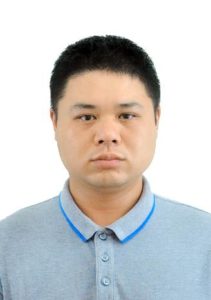
KEYNOTE TITLE:
|
KEYNOTE SPEAKER 2 |
|
|
Zaheera Zainal Abidin is a senior lecturer and researcher in Universiti Teknikal Malaysia Melaka. She is a deputy leader of Information Security, Forensics and Networking (INSFORNET) research group. She is one of the Certified CISCO Academy (CCNA) in computer networking field and certified Internet-of-Things specialists. She received Bachelor of Information Technology from University of Canberra, Australia. Then, she joined ExxonMobil Kuala Lumpur Regional Center as a Project Analyst. After that, she completed her MSc. In Quantitative Sciences. Afterwards, she worked as lecturer at Universiti Kuala Lumpur (UNIKL-MIIT) and as a program coordinator while completing her MSc. in Computer Networking. PhD holder in I.T. and Quantitative Sciences from Faculty of Computer and Mathematical Sciences, Universiti Teknologi MARA, Shah Alam, Selangor. Research interest in Internet-of-Things, biometrics, network security and image processing. She has published chapters in books, conference papers and indexed journals, produced copyrights, received award in competition and exhibitions and received grants from Ministry of Education Malaysia (FRGS, PRGS and TRGS) and industry (PPRN). Also, she did consultations with Cyber Security Malaysia, Ministry of Health Malaysia, Infineon and SigTech Solutions Malaysia. |
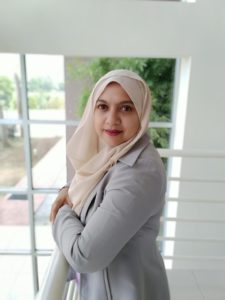
KEYNOTE TITLE:
|
KEYNOTE SPEAKER 3 |
|
|
She is an associate professor at the School of Computing, Faculty of Engineering, Universiti Teknologi Malaysia (UTM). She received her B.Sc. in Software Engineering from Sheffield Hallam University, UK, and her M.Sc. and Ph.D. in the field of Software Engineering from UTM. She has served as the Head of Software Engineering Department from November 2009 till January 2015 and Deputy Dean (Academic and Student Development) in 2017-2018. Currently she is Associate Chair (Academic and Student Development) at School of Computing since July 2018. Her research areas are search-based software engineering, software reuse, software quality and testing, software cost estimation and higher learning education. Most of her research projects are focused to the domain of educational robotics, software engineering education, healthcare system and real-time embedded system application. |
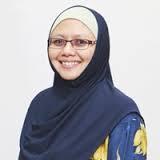
KEYNOTE TITLE:
|
ICAC 2019 Keynote Speaker
KEYNOTE SPEAKER 1 |
|
|
I am currently an Associate Professor at Universiti Malaysia Pahang (UMP), Malaysia with more than 15 years’ experience as an academic lecturer at Faculty of Computer Systems & Software Engineering, UMP. I received my PHD in Computer Science from University of Nottingham, UK. I hold various responsibilities in the administrative works including 6 years as the Deputy Dean of Research and Graduate Studies. I am currently a Head of Software Engineering Research Group and an Editor in Chief for International Journal of Computer Systems & Software Engineering. I am one of the academic program committee in UMP and other universities due to my vast experiences in teaching master and undergraduate courses. My research work focusses on Green Sustainability, Simulation Modelling, Software Agent and Software Usability Testing. I have published more than 100 publications in high impact books, journals and conference proceedings. Moreover, I have shown an excellent achievement in research competition by wining gold medals and various awards in local and international exhibitions. In addition, I have obtained 6 copyrights as the principal investigator for my research work. My outstanding performance in academic and research has been recognized locally and internationally. |

KEYNOTE TITLE:
Modelling Human Traffic Flow using Agent Based and Discrete Event SimulationSimulation appears to be the preferred choice as a modelling and simulating tool for investigating human behaviour. This is due to diversity of human behaviours is more accurately depicted by using simulation. Throughout the literature, the best-known simulation techniques for modelling and simulating human behaviour are DES and ABS. DES models represent a system based on a series of chronological sequences of events where each event changes the system’s state in discrete time. ABS models comprise several autonomous, responsive and interactive agents which cooperate, coordinate and negotiate among one another to achieve their objectives. DES and ABS can deal with individual elements such as individual behaviour which is located at low abstraction level (greater detail of the problem under investigation). However, it is impossible to model certain human behaviour such as human queuing using purely ABS due to the independent entities inside ABS are decentralised. On the flip side, DES is found suitable to model human queuing and priority sorting due to its event scheduler structure. Therefore, bringing DES inside ABS is significant in modelling the diversity of human behaviours as realistic as possible; such as modelling human traffic flow. Human traffic flow modelling is important for construction or redesigning projects such as shopping centers, airports or railway stations. In addition, simulation analyses can be used by architects in the designing stage or by civil authorities to simulate evacuations for a good design of buildings and pathway projects. |
KEYNOTE SPEAKER 2 |
|
|
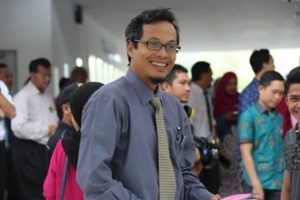
Dr. Mahmuddin obtained his PhD in 2008 in the areas of system engineering, Cardiff University, United Kingdom. He is currently a senior lecturer with the Department of Computer Science, School of Computing, Universiti Utara Malaysia (UUM). During last 18 years of his stay at the school, his teaching, research and development interests have been towards of technical and social aspect of computing, computational intelligent and expert system. Currently he is Dean of Student Development and Alumni for College of Arts and Sciences, UUM. He is also member for Malaysian Statistic Association, Internet Society, chairing for P2A Malaysian Chapter (an association of students mobilities in ASEAN countries), and coordinator for School-UUM Cluster of excellent under Ministry of Education. In UUM, besides serving as Examiner for Master and PhD theses, he is also a Senate member. He is also regularly invited as an external examiner for Master and Ph.D theses from other universities including Universiti Teknologi Malaysia (UTM), Universiti Kebangsaan Malaysia (UKM), Universiti Malaysia Sarawak (Unimas), and Asean e-University (AEU). He also reviewer for many conference and journal including The Security and Communication Networks, Neural Computing and Application, The International Journal of Computer Science and Information Technology for Education, Human Centric Computing and Information Sciences, and Malaysian Journal of Computer Sciences |
KEYNOTE TITLE:
Developing a Successful Student: Big Data, Internet of Everything and Artificial IntelligentStudents are the main asset for many countries. Students plays a vital role as part of the continuity of the nation’s wealth and sustainability of the nation. Students must be developed and trained well to prepare them to be successor at least of the current workers. As we already know, each of this human is unique and specialized. Sadly, our current education system at all level, either in primary, secondary or even in tertiary level, unable to identify this and provide a generic training to these students, one system fits all. There are many reasons why this happen, financial burden, lack of man power, difficulties from the bureaucracy (government, local authorities, etc.), are among of the main issue. This is not only wrong but make our education system inconducive for learning process of the student. We would love to propose an integrated computer application that capable of identifying the students’ needs individually and will be able developed that successful characters. In this paper, we humbly tabulate all necessary requirements and the support from the technology. To materialize this idea, we also proposing the usage of the technology namely big data, artificial intelligent, and internet of everything. We hope that with this idea, it can help the management to be able to manage, develop, and flourish the students’ need individually, and no more one system fits all. |
KEYNOTE SPEAKER 3 |
|
|
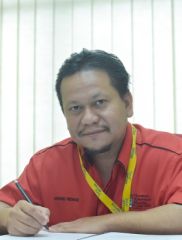
Currently a Postgraduate Coordinator and Senior Lecturer at Center for Artificial Intelligence and Technology (CAIT), Faculty of Information Science and Technology, Universiti Kebangsaan Malaysia (FTSM, UKM). After finishing his Bachelor Degree in Management Information System (MIS), UKM in 2000, he worked as Software Engineer at Xybase MSC. He had involved in some interesting projects such as Eprocument with Malaysian Government and integrating airport system (back end) at KLIA. In 2003, he obtained his Master Degree in Distributed Computing from Universiti Putra Malaysia (UPM) and had started his career in academic as lecturer in UKM. A Ph.D. holder from Queensland University of Technology (QUT), Australia in Sentiment Analysis (2015) is also currently the Head Researcher at Sentiment Analysis Lab, CAIT. His expertise is in Sentiment Analysis/Opinion Mining, Feature Selection, Feature Extraction, Ontology , Data Mining, and Social Network Analysis (SNA). In 2016, together with his mentors, Emiritus Professor Dr Abdul Razak Hamdan and Prof Dr Azuraliza Abu Bakar, he has started Master of Data Science program in UKM, which is the first in Malaysia. In research, he already involved with more than 22 projects which 12 are still active until now. At this moment, he lead three research projects from diffirent funder such as Regional Cluster for Research and Publication (RCRP) and Fundamental Research Grant Scheme (FRGS). His current researches are mostly in Sentiment Analysis and Social Network Analysis. He also has 10 collaboration grants from various organisation in Malaysia. |
KEYNOTE TITLE:
New Online Social Networks (OSNs) Model for Community Detection Based on Minimum Spanning Tree (MST)Today, with regard to the exponential growth rate of users and their activities on Online Social Networks (OSNs), understanding the characteristics of this network is like a labyrinth puzzle, hence this network should be analyzed accurately rather than past. It analyzes network to help us understand many issues in our society. Huge transaction on this network is an unbeatable opportunity to extract latent relations between people in community. Community detection is one of the most important issues in OSNs. Community detection methods in static networks try to find a group of similar nodes, so that the nodes in each community have the highest connection to each other than the rest of the network. The existing studies in this domain have 2 main limitations. First, betweeness based and evaluated by modularity metric that assign a same weight to each connection and only consider amounts of connections between all pairs of nodes. In other word, some relationships during the time are passive and friends do not have any interaction with each other. Second, it will be 3 billion OSN’ users by 2020, if each user has 50 friends on average, then 150 billion edges would exist in the network. This means most of the connection will be done with passive users in community. Therefore, this study aims to propose a new Minimum Spanning Tree (MST) structure algorithm to prune the network for detecting communities with regard to user interaction attributes in order to improve the time, space complexity and above all accuracy. To achieve this, we will develop new algorithm for detecting frequency of interaction path between communities, and to propose new algorithms based on MST for community detection process. This research will review current technique on Community detection, and event detection in OSNs. |
